Sunday, 27 September 2009

Current Commissions

I have just been commissioned to write a text for the next edition of Electric Sheep: I will be writing about US Vigilante films of the early 70's to the late 80's. The article will take a broad approach to the vigilante theme and so will include films such as Death Wish, Dirty Harry, Taxi Driver and First Blood.

My second book, Studying The Devil's Backbone, is with the copy editors, bringing it a step closer to publication.

Sunday, 13 September 2009

Recently Viewed

The Zombie Diaries (Kevin Gates & Michael Bartlett, 2006)


“I just want to document everything” – Matt, cameraman, Diary One: The Outbreak.


Broken into three discreet sections, The Zombie Diaries is a collection of video diaries made by survivors of a viral pandemic. As indicated by the title cards within the film - Dairy One: The Outbreak, Diary Two: The Scavengers and Diary Three: The Survivors – the narrative chronicles the increasingly desperate situation the characters find themselves in: the first diary records the initial confusion over what is actually happening, events which are soon followed by the appearance of the first zombies. Lurching out of the darkness, they stumble towards the camera, groaning and drooling blood and spittle. The second diary, recorded one month after the first, depicts the efforts made by three people to survive what is now clearly an apocalyptic situation as food and fresh water supplies are running low and tempers fray as the amount of zombie steadily increases. The final diary depicts events well into the crisis and where the attempts to survive start to take quite a dramatic turn when the various small groups of survivors make contact with each other via short-wave radio.

The format of the video diary immediately provides a narrative structure and logical timeframe for the film and ensures a high level of intimacy between the characters and the viewer, a quality emphasised by characters repeatedly and aggressively covering the camera lens during arguments or scenes of explicit violence. The strategy of the hand-held camera brings a great sense of reality to the footage, a quality that is enhanced by the lack of composition and the sole use of diegetic sound. Because of this, the horror felt during the film is not actually generated by the zombies (although when they are seen, these reanimated corpses are particularly grotesque) but by the contrast between the normality of the locations and the increasingly volatile relationships between the characters. To this end, the film suggests that in situations in which we are positioned in direct threat our capacity to listen to others and work with others is our greatest strength for arguing and bickering (over such trivial matters as cigarettes and alcohol) leads only to more violence and more death.

As an interesting aside, The Zombie Diaries positions its antagonistic pandemic in contemporary real-world events: the opening voice-over is a montage of news reports chronicling the emergence of Avian Flu. Whilst the film does not overtly say this is the cause of the outbreak, it intimates its enough. As the characters discuss their situation, they speculate on what else could have caused the epidemic, with one suggesting “another terrorist threat”. The idea that the virus may have been released by terrorists is consolidated by another character who verbally equates the pandemic with the events of September 11 2001, saying that in the morning everything was normal but by the afternoon everything had changed because of one singular act. Whilst these comments position the narrative in relation to world-wide issues, the indication that the virus is related to the movement of livestock is reiterated by scenes in the third diary in which the group’s leader, who fears more than anything else contamination, insists that her fellow survivors wash their hands and feet in a bucket of disinfectant before entering the house. Such scenes of cleaning before entering a defined hygienic clearly recall the government imposed controls during the BSE crisis and so successfully aligns the fantastical narrative of the undead with the very real events that took place in the UK.

The success of the tension built within the film can be mostly attributed to the strong sense of realism that pervades the film: the dialogue is consistently naturalistic and, at times, feels as if it has been ad-libbed, a quality which only adds to the idea of recording events as they ‘happen’. The use of real locations as sets compounds this sense of realism. In addition to this the narrative itself is bound to reality. Instead of narrative events slipping into horror film cliché, it unfolds in a logical manner as the necessities of survival begin to dictate actions and events: after a few days of the country being in the grip of the pandemic the power goes out, forcing the contemporary citizens to revert to primitive means of sourcing light and warmth by making fire. This is then followed by the twin search for food and other survivors. Whilst at first food and water is abundant it soon begins to run out, necessitating excursions into the zombie infested shopping centres to loot supplies. And, as those supplies dwindle, rationing is enforced and life’s luxuries and addictions are voided in the face of the threat posed by the zombie hordes. Self defence becomes the optimum consideration. With only a few survivors possessing either a hand gun or hunting rifle, the breaking into shops and businesses becomes increasingly dangerous, and all the more so as one character points out “we’re running out of bullets”.

Perhaps one of the greatest strengths of The Zombie Diaries is the clarity by which it depicts a national catastrophe: although both the characters and audience are aware that the pandemic is successfully infecting the populace, the actual result of that is never actually seen. Instead, this horrific event is hinted at through fragments of news reports, fleeting images of vast empty landscapes and carefully composed shots of vacant suburban streets and car parks. The horror lies not what is seen but in what is not been seen.

Tuesday, 8 September 2009

Recently Published


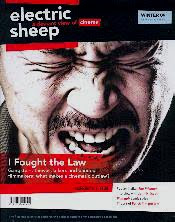
Two of my essays have been published at the start of this month: the first is a critical analysis of the BBC Three serial Being Human, published in MediaMagazine (Issue 29) and the second is a comparative analysis of Requiem and The Exorcism of Emily Rose, published in Electric Sheep (Autumn 2009).

Electric Sheep can be purchased from the newsstands whilst MediaMagazine is available from their website: http://www.mediamagazine.org.uk/

Wednesday, 2 September 2009

Notebook Extract

Candyman

For sociology research student Helen the academic world is clearly dominated by men, a situation which her thesis seeks to undermine by proving the invalidity of existing texts concerning urban legends – all seemingly authored by men. This male domination extends into both her family life (her husband is a university professor) and into the illusionary world created by the supernatural element of the Candyman: the Gothic ‘other’ world created by his hypnotic presence lulls Helen into a hallucinatory state and so makes her an instrument of his murderous desires. She becomes, quite literally, an extension and/or physical embodiment of the antagonist’s desire for violent and murderous actions. In this respect Helen’s submission to the threatening male could be interpreted at a much more complex level, with the narrative itself potentially being in conflict: the male presence of the Candyman can be seen as means of repressing the Female Gothic narrative trajectory by forcing the female protagonist into a typical male narrative, making her a character driven not by emotion and understanding but by base instinct which results in externally aggressive actions.

Regardless of how this interpretation is perceived, at a basic narrative level Helen is forever trapped in a male dominated world, be that in the tangible world of the university or the hallucinatory one created by the Candyman. This oppression culminates into total domination and control, with Helen being simultaneously attracted to and repulsed by the two men in her life. Although she loves her husband, Helen not only suspects him of having an affair with an undergraduate student but is also, unconsciously, jealous of his academic success. As she struggles to deal with these conflicting emotions, her (possible) hallucinations of the Candyman represent a projected externalisation of these anxieties: handsome, well spoken and rich, the Candyman offers Helen immortality if she will be his victim. With his calm voice and promises of power and dominion, Candyman is essential a seducer, a tempter whose own dominance is reinstated by the death of each of his victims.

Unable to distinguish between what is real and what is not, Helen seemingly slips into a state of madness and fully enters into the delusion world the supernatural element may or may not have created. As the film reaches its climax, Helen attempts to save the baby Candyman requires as a final sacrifice. Although she rescues the baby and kills the Candyman, Helen herself dies. But, given the Gothic intensity of the film, death is never the end and in the narrative's final twist, Helen returns from death and using her husband’s lover as Candyman used her, murders him.

Friday, 28 August 2009

Current Commissions

Currently working on the second draft of the Doctor Who essay for Cambridge Scholars Publishing and in the process of organising interviews with Splintered director Simeon Halligan and Marc Price, the director of Colin.

Beyond Hammer

More reviews of my first book Beyond Hammer have appeared on the newsstands: Empire awarded the book three out of five stars commenting that it was an "engaging" read for its target audience whilst Total Film also awarded the book three out of five stars, stating that it was "a genre primer that lucidly skin-peels four decades of scares and subtexts, from The Vampire Lovers to The Descent."

Thursday, 20 August 2009


The Summer 2009 edition of Electric Sheep features my text I Robot. I Revolt, an essay on the popular sub-genre of homicidal technological revolt in Hollywood cinema, featuring Westworld, Blade Runner, The Stepford Wives and RoboCop.

Sunday, 16 August 2009

Current Commissions

Now that the First Drafts of the Doctor Who chapters have been completed and sent to their respective editors, I have been working on the Second Draft of the Studying The Devil's Backbone book alongside viewing films for my next essay in MediaMagazine, a text chronicling the history of the Horror Mockumentary.

Beyond Hammer


A review of my first book, Beyond Hammer, has been published in the August 2009 edition of the magazine Filmstar: rated three and a half stars out of five, the reviewer states that the book is

"all well-written and enlightening, managing to tread that difficult line between academic depth and easy readability."

They also state that it is "good to see Shaun of the Dead being taken seriously... it does, after all, provide the essence of Blighty; a strange, funny, but, in the end, a messed-up patriarchy where everyone goes and hides down the pub and tries to pretend it's not happening."

Filmstar, August 2009. p.148

Monday, 3 August 2009

Current Commissions

The second Doctor Who text is now finished and with the publisher whilst my article on Requiem and The Exorcism of Emily Rose has now been signed off by the editor of Electric Sheep and will be published in the September 2009 edition.

Beyond Hammer

My first book, Beyond Hammer, has received its first customer review on Amazon: the reviewer gave the book 5 out of 5 stars and commented: "With the international success of recent British films such as 28 Days Later and The Descent, this academically-rigorous but highly readable book is a timely account of just how far the genre has progressed since Hammer's final film in 1976. An impressive debut."

The book was also ranked 24 (out of 100) on Amazon's best seller list for books on horror cinema.

Monday, 27 July 2009

Personal Project Extract

Rewriting Barbara: Night of the Living Dead (1990)

...In Romero’s revisions, the 1990’s Barbara begins the narrative in a similar manner to her 1969 counterpart but, instead of regressing into catatonia, she is becomes a positive force, an active, capable and strong person. The 1990’s Barbara becomes a continuation of the character Sarah from Day of the Dead (1985): as a scientist Sarah is written as someone who is fully aware of the situation, one who has a strong ethical stance and is driven to search for a practical solution to the undead threat. As an individual person, Romero writes her as a mature, sexual and capable woman. And, when the undead attack or bite, she proves herself to be an aggressive and effective survivor. The 1990’s Barbara demonstrates all of these qualities, consistently proving herself and consistently proving that for all the protective and macho posturing of Ben and Cooper, she is the most mature and masculine of them all.

Romero begins his remake in the same way as his original, with Johnny driving Barbara to the cemetery. As they drive through the desolate landscape, brother and sister bicker about their deceased mother. As the argument develops, Johnny accuses Barbara of being afraid of their mother. She immediately denies this but Johnny pursues the accusation by commenting that “She damn near drove you into a convent” and then “When was the last time you had a date?” Johnny’s implication of repression becomes all the more apparent when Barbara steps out of the car: bespectacled, she wears a blouse buttoned up to the collar over which she wears a pink knitted cardigan. Her heavy woollen skirt hangs below her knees.

As they approach their mother’s grave, Johnny continues his taunts until, inevitably, the first of the undead attacks, grabbing then clawing at Barbara. Both fall to the ground, Barbara’s glasses knocked from her face as they do so. As she tries to defend herself, Johnny attempts to pull the zombie off but his attempts are hampered by Barbara who, throughout the brief struggle, manages to both accidentally kick her brother’s face and stab his hand. As the struggle continues Barbara loses her cardigan, the top buttons of her blouse come undone and her shiny black shoes come off. The attack ends with Johnny managing to drag the undead person off his sister only to slip on one of her lost shoes and, as he falls, breaks his neck on a tombstone.

This opening sequence, although reasonably similar to the original, has great importance to the revised Barbara. Her life, up until this point, has clearly been dominated by her mother to the extent that her confidence and sexuality have been suffocated. During the opening struggle the clothes of her repression – the glasses, the cardigan, and the concealing blouse – are all stripped from her and her brother killed. Symbolically the dead have inadvertently undressed her of her repressed state.

Monday, 20 July 2009

Current Commissions

In the final stages of the First Draft of the Doctor Who chapter for The Science Fiction Foundation and have taken some time out from commissions to work on a long-term personal project concerning Guillermo del Toro...

Recently Viewed

The Midnight Meat Train (Ryuhei Kitamura, 2008)

The involvement of Clive Barker in any project – be that a novel, film, art work or console game – is often a sure sign of quality. Regardless of format, Barker’s distinctive vision of the world of the real, of fantasy and of horror consistently emerges and confirms him as one of the greatest creative minds of the genre. Imagine then the potential of a film adaptation of one of his ground breaking short stories from The Books of BloodThe Midnight Meat Train.

The title alone is enough to get the genre fanatic salivating. The imagery it conjures up – the dark, cold, and rickety corridors of a train slick with blood and littered with meat – is ideal material for an era of horror cinema preoccupied with Painography. Yet, even though the film has a reasonably small body count, the gore content of Midnight Meat Train is quite obtrusive: fast and bloody, the violence perpetrated by Mahogany seems strangely at odds with the rest of the narrative. Although the explicit nature of these events will slake the thirst of the average gore hound – as fingers are mashed, bodies butchered, limbs carved and brains are tenderised all in sickening close up – these scenes actually detract from the tension the film is trying so hard to generate. The potential horror of Mahogany lies in his menacing presence, the contradiction between his normal appearance and Everyman quality with his brooding nature and seemingly endless repressed rage. Watching him act out his fury in a frenzy of explicit violence only manages to dissipate whatever fear that surrounds him.

This is no Hellraiser nor was it ever intended to be but the shadow that film has cast is long and deep, making it difficult not to measure any film that is Barker related against it. Where the film does succeed is in its depiction of the contemporary city as a space of concealed horrors, the anonymous nature of city life and the immense claustrophobia of the tube trains. All are admirably constructed by director Kitamura and provide an interesting foil to the gouts of blood that are freely spilled. Yet, for all this, the film feels way too long and stretches Barker’s original material to the limit before the concluding payoff. Die hard Barker fans will not be overly disappointed given earlier filmic treatments of his work (Underworld and Rawhead Rex) nor will those who like blood and brains sprayed and splattered across the screen. But for those looking for the melancholy in Barkers work and manifestations of his immense imagination may be disappointed.

Sunday, 12 July 2009

Current Commissions

Completed the Doctor Who chapter for the Cambridge Scholars commission and have now begun work on the Emily Rose short essay for Electric Sheep: the text will examine the real-life events behind The Exorcism of Emily Rose and discuss their depiction in this film and Requiem. Preliminary texts have also been drafted for the second Doctor Who chapter for The Science Fiction Foundation publication.

Notebook Extract

30 Days of Night

The sense of the vampire group functions as a family is reflected in the survivors and highlights their deficiency in the face of the Other: whereas the vampires are an organised collective and have trust in their leader, Marlow, the humans are disorganised and continually question their assumed leader, Eben. A further disparity occurs in the sense of relationships that occur within each group: the humans are survivors, familiar to each other only as friends and neighbours whilst the vampires, although from completely different families, are a family that is quite literally blood related through the contaminating bite of the vampire. As the film progresses, Marlow’s relationship with the dark haired female vampire suggests that they are, in some sense of the word, a couple. They respect each other, share victims and Marlow’s allows this ‘partner’ chance and opportunity to attack and kill before the others. In this state, they function as a normal couple, a further instance of difference that highlights the deficiency in the humans as this relationship is reflected in Eben and Stella: whereas the vampires suggest a healthy, mutual and equal relationship, Eben and Stella are clearly unhappy with each other to the extent that their relationship has collapsed and the pair have split up.

Thursday, 2 July 2009

Interview Extract

Rendering Nature: An interview with Richard Bell, Background Artist on Watership Down

Based upon Richard Adams best-selling novel Watership Down (1972), Martin Rosen’s animated adaptation (1978) is a remarkable achievement. As James Clarke suggests, “Watership Down is a seminal moment in British animation, building on the tradition set by Halas and Bachelor with Animal Farm as well as, in more general terms, showing that classical animation could be produced in Britain.” (2004, p.103) Part of the film’s sustained popularity lies in its ambiguity towards the audience: although one expects a film about rabbits to be aimed at children, the narrative and animation combines to create an ‘adult’ world, one which projects brutal images of violence and bloodshed alongside a commentary on the value of the landscape and humanity’s inherent need to destroy it.

Production on the film began in 1975, with producer Rosen employing Disney veteran John Hubley as director. Hubley worked on the film for a year but his desire to move away from animated realism contrasted with Rosen’s idea that for Watership Down needed to be as realistic as possible. By the end of the first year, Hubley had left the production and Rosen took over as director. Regardless of this early departure, commentators have suggested that Hubley’s approach is evident in the mythical prologue that opens the narrative as well as in the final scenes where Hazel is confronted by the rabbit’s harbinger of death, The Black Rabbit of Inlé.

In effort to explore the depths of this production, I contacted Richard Bell, one of the film’s Background Artists. Working as an artist with a considerable interest in natural history, Bell seemed like the ideal choice in relation to the film’s inherently realistic depictions of nature.

How did you come to be involved in Watership Down?

A painter friend of mine who had graduated a year ahead of me at the Royal College had gone to see the Watership Down people. She didn’t want to do it but she referred them to me. So I went to an interview with John Hubley. That was about a year after I’d graduated from college. They liked my work.

Once you were offered the job, did you visit the real Watership Down?

When I heard I got the job, I said, right, what I would like to do is go and see the place for myself and so they paid for my expenses. (Richard reaches across the table and picks up a sketchbook. He briefly leafs through it and then shows me a drawing of the landscape near Sandleford Warren.) I thought this is the sort of thing I should be drawing because I know they [the rabbits] have to cross this stream. Of course in the film its more of a river than that – you have to add a bit of drama. I actually found a lad who had caught a rabbit down in the valley here and I kept that in a homemade rabbit hutch but I felt so sorry for it that I soon let it go back down in the valley. (Richard flips through his sketchbook and finds the pages he is looking for, the spread of line drawings of rabbits.) Those are my versions of the main characters from Watership Down. The problem with making the rabbits naturalistic is that it is difficult to tell the difference between them so they had to be humanised to some small extent: if Bigwig was a big rabbit then he really was big and if Fiver was a little rabbit he really was scrawny.

Can you tell me about your interview with Hubley?

John Hubley looked through my sketchbooks and he said “I can see how we could use that” and there was a picture of May blossom and he said “I’d like to use something like this so that it would just be cut to white like a sketchbook page and you would have my shaky pen and ink drawing of this May blossom and then the rabbit would come in below.

So the rabbit would enter from off-screen onto the sketchbook page in order to step into the imaginary world of the drawing…

Hubley obviously had this playful sort of way he would have liked to have done it but I suspect that he could see that Watership Down was part of that English tradition of natural history illustration and he could obviously see that I was part of it too. He took me on. A couple of my painter friends came for interviews but, although I was accepted, by the time it came to decided on my pals working on it things had changed a lot at Watership Down. It became a different film…. It’s quite remarkable what Martin Rosen did with it but there’s this kind of lost film there that was never made, a concept film that never got made.


Sunday, 28 June 2009

Recently Published...

My first book, Beyond Hammer: British Horror Cinema since 1970 was published mid May this year by Auteur Publishing:

Though they are often critically neglected, British horror films make up a significant and steadily growing body of genre works within a nationally grounded cinema. Deeply rooted within the Gothic tradition, these post-Hammer Studio films place their antagonistic threats within contemporary Britain, allowing werewolves to roam the Moors and isolated islanders to practice Pagan sacrifice, hiding a family of cannibals behind the white tiled walls of the Underground, or unleashing a virulent plague that causes zombies to stumble through middle class suburbia. The juxtaposition between these unreal elements and the vivid Britishness of characters and locations has led to a collaborative body of work that examines the modern fears of contemporary Britain. Accessible to the general reader, Beyond Hammer provides new critical readings of classic, contemporary, and lesser known films of the post-Hammer British horror canon. Chronologically ordered, these chapters feature new and engaging readings of The Wicker Man, Death Line, An American Werewolf in London, Mary Shelley’s Frankenstein, Hellraiser, 28 Days Later, The Last Horror Movie, Shaun of the Dead, and The Descent.

The book is currently ranked 24 (out of 100) in the Amazon Best Sellers list for books on Horror Cinema.

To purchase Beyond Hammer: British Horror Cinema since 1970 please follow one of these links:

Amazon.co.uk

Columbia University Press


Play.com

Auteur Publishing

Thursday, 25 June 2009

Current Commissions

Recently completed the Tim Burton essay for Splice and that has now been forwarded onto the editor. The second draft of the Alien 3 chapter is now finished and awaiting proof reading before being sent to the publisher. Have begun work on the Doctor Who chapter for the Cambridge Scholars publication.

Recently Viewed...

Resident Evil: Extinction (Russell Mulcahy, 2007)


Where as Resident Evil (Paul W.S. Anderson, 2002), with its countless zombies, skinned dogs, and mutating monsters was a reasonably acceptable adaptation of the console game, its sequel, Resident Evil: Apocalypse (Alexander Witt, 2004) was bad. Very bad. Too bad to discuss. So, as dictated by the Law of Diminishing Returns, the third film of the trilogy would be, by definition, appallingly bad. But surprisingly it’s not. In fact, it’s a guilty pleasure to watch Alice tool up with an array weapons and slice, dice, maim, shoot, decapitate and obliterate as many zombies as she possibly can within the ninety minute run time.


Although the film begins, cryptically, at the start of the original film, the plot soon gathers pace as the concept of the world devastated by the T-Virus outbreak is established and the band of hardy survivors of this New World are introduced: strong women with big guns are paralleled with equally strong men who have as equally big guns. And whilst this all seems perfunctionary for contemporary films of this type, it does lead to some cracking set pieces involving the search of an abandoned hotel, a Birds-esque assault by a mass of infected crows, and a multitude of zombie encounters. Whilst all this is going on above ground, below ground the Umbrella Corporation continues their insane biological experiments in an effort to reverse the effects of their virus. It is here that the quality of the film suffers as this sub plot is strongly reminiscent of Romero’s classic Day of the Dead: an increasingly mad scientist captures zombie specimens, puts them in a corral and then attempts to educate them. All of this is compounded by the fact that the Umbrella facility is basically a huge underground military complex that is not too dissimilar to the underground silo of Romero’s film.


Whilst all this does detract from the overall quality of the film’s sense of originality, it still delivers in spadefuls of action, suspense and gore, as well as in its imagery: Alice attempts to leave the Racoon City mansion are a sterile juxtaposition of cold clean whites and deep blood reds, the darkness of the abandoned hotel punctuated with pockets of gold light and the ariel images of the millions of zombies stumbling through the wastelands all add a classy visual depth to the film. Such a quality is unsurprising as director Russell Mulcahy called the shots on Razorback (1984), Highlander (1986) and The Shadow (1994).


In all, a good little film that certainly delivers as long as you don’t expect too much from the potential the franchise has to offer.

Sunday, 21 June 2009

Notebook Extract

I always carry a notebook and pen with me. When travelling, waiting to meet someone or just sitting enjoying a cup of coffee, the notebook comes out and is used to jot down ideas, sentences, paragraphs and memos for possible commissions and personally instigated texts. What follows is a recent extract from my current notebook...

The Dark Half: King and Romero in Crisis


The Dark Half continues Stephen King's 'writer in crisis' concept as a means of exploring the act of authoring horror fiction: The Shinning and Misery (and to some extent Desperation) have as their protagonist a novelist who is trapped within a remote environment: Jack Torrance and his family are trapped within The Overlook Hotel whilst the severely crippled Paul Sheldon of Misery is held hostage by his 'Number One Fan', Annie Wilkes. As Torrance immerses himself deeper into insanity to sustain himself, so Sheldon uses his fear to write what turns out to be his best novel to date.

Of the two novels, The Dark Half bares the strongest resemblance to Misery: In both narratives the novelist kills off their best selling character (Sheldon's Misery Chastain and Beaumont's pseudonym George Stark) in order to write more 'serious' literary works. Their literary deaths are, however, short lived as each returns, in one form or another, to punish their creator. One cannot help but see these texts as King critiquing (and fearing) his own success - the paranoia of reprisal from the established audience (let alone a critical response) as well as the anxiety of how one is perceived as the creator of disturbing and violent acts: In Misery Sheldon writes for an audience of one, Annie Wilkes, yet as his 'Number One Fan' she is representative of all of Sheldon's fans (implying that readers of such fictions are as deranged as those within the novels) where as George Stark represents that dark secluded part of the writers personality that enables them to produce such horrific works of fiction.

As the threat to each writer increases, those around them are systematically killed and so implicate a sealing of the fate of the writer. Their only chance for survival ironically remains in their ability to write: Sheldon is aware that if he continues to write Wilkes will not kill him and so provides him with the opportunity to conceive of an escape plan where as Beaumont must confront his alter ego and write with him in order to prove that the dark and violent acts of the George Stark novels come from him and not his alter ego.

Within the novel King provides the reader with a multi layered text, one that is symbolically written in an almost schizophrenic style as it shifts from placid descriptions of the Beaumont's family life to the graphic descriptions of Stark's murders. As a novel of seemingly two halves one cannot help but continue to draw comparisons with the author himself, one who opted to publish some of his darker, more violent texts under the pseudonym of Richard Bachman.

Whilst King's critique is internalised and centred upon the self, Romero often presents an externalised analysis, using his characters and their isolated entrapment to deftly examine contemporary cultures decline into consumerist violence. Whilst doing this Romero, like King, makes use of images of extreme violence and gore to emphasise his point: the grotesquely decaying zombies of the Dead trilogy are the ultimate consumers, explicitly indulging in acts of mindless cannibalism.

Current Comissions

Final Draft of Alien 3 chapter nearly finished. It just needs few descriptive details adding for coherence and the film dialogue quotations checked. Tim Burton essay proof read and needs very few, very minor changes. Commissioned earlier this week to write a text for Electric Sheep for their forthcoming issue: a comparative text between Requiem and The Exorcism of Emily Rose.

Tuesday, 16 June 2009

Recently Published


The Spring 2009 edition of Electric Sheep features my DVD review of The Carnival of Souls.