Showing posts with label George Romero. Show all posts

Tuesday, 10 November 2009

Recent Commissions

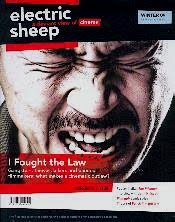
I recently completed a commissioned article for the February Fantasy themed edition of MediaMagazine: Reading the Apocalypse is an overview of British post-apocalyptic film and television, covering The War Game, Threads, and both versions of Survivors. In the original draft there was a section concerning 28 Days Later but this was, eventually, cut due to the required word count.

Never one to waste words, it is included here...

28 Days Later (Danny Boyle, 2002)

While a nuclear assault destroys the physical landscape, a viral pandemic only destroys the populace, leaving in its deadly wake a litter of corpses but buildings, shops, and homes all still standing and untouched. Such a quality allows filmmakers to create desolate images of familiar locations, poignantly creating the horror of the consequences of a viral outbreak. The potential for these images to be so dramatic is validated by 28 Days Later: having woken from a comma, young bicycle courier Jimmy (Cillian Murphy) finds the British population virtually eradicated by the accidental release of the Rage Virus: stumbling outside, he finds a very familiar London totally devoid of people. There no corpses, just the empty streets, an overturned bus, and bank notes blowing in the wind. As he wanders through he streets, Jimmy passes familiar landmarks – Tower Bridge, the London Eye and Cenotaph – that are all rendered as if grave markers to the deceased population.

As Jimmy’s story of survival unfolds, the theme of family very quickly comes to the fore: being chased by a group of the Infected, Jimmy is saved by Selena and Mark. Taking him to their underground hideout, Jimmy is informed of the current national (if not global) situation. The three seem to form a family unit, but it is one cut very short when Selena thinks Mark might be infected and quickly – and rather brutally – kills him. From this act it would seem that the notion of the family has been totally voided by the pandemic but as the narrative unfolds, it becomes clear that the film is not just about surviving in a post-apocalyptic world but starting a new and better family in this new world. As a consequence, Jim’s personal narrative trajectory becomes the search for a father figure, which leads him into encounters with two ‘families’ – the normal domestic of past offered by Frank (Brendan Gleeson) and his daughter Hannah (Megan Burns) and that of the future represented by a military outpost. Soon, Jim has to make his choice between the two and, in a violently cathartic conclusion, takes on the role of the Father himself to eradicate the threat presented to him and those he cares for. For a violent and pessimistic film, 28 Days Later ends on a perversely optimistic end: the three survivors – Jim, Selena and Hannah – are seemingly rescued as the Infected slowly die of starvation.

The film’s writer, novelist Alex Garland, has stated that the influences upon 28 Days Later ranged from the classic texts by Wells and Wyndham as well as more recent American cinema, particularly the zombie films of George A. Romero. Using the realist elements of these texts to guide him, Garland created the fictional Rage Virus – a seemingly genetically engineered disease - as a blood borne disease. With such a construct, the Rage Virus becomes an obvious metaphor for the nation’s fears of Ebola, SARS, Avian Flu as well as the sustained awareness of AIDS.

Monday, 27 July 2009

Personal Project Extract

Rewriting Barbara: Night of the Living Dead (1990)

...In Romero’s revisions, the 1990’s Barbara begins the narrative in a similar manner to her 1969 counterpart but, instead of regressing into catatonia, she is becomes a positive force, an active, capable and strong person. The 1990’s Barbara becomes a continuation of the character Sarah from Day of the Dead (1985): as a scientist Sarah is written as someone who is fully aware of the situation, one who has a strong ethical stance and is driven to search for a practical solution to the undead threat. As an individual person, Romero writes her as a mature, sexual and capable woman. And, when the undead attack or bite, she proves herself to be an aggressive and effective survivor. The 1990’s Barbara demonstrates all of these qualities, consistently proving herself and consistently proving that for all the protective and macho posturing of Ben and Cooper, she is the most mature and masculine of them all.

Romero begins his remake in the same way as his original, with Johnny driving Barbara to the cemetery. As they drive through the desolate landscape, brother and sister bicker about their deceased mother. As the argument develops, Johnny accuses Barbara of being afraid of their mother. She immediately denies this but Johnny pursues the accusation by commenting that “She damn near drove you into a convent” and then “When was the last time you had a date?” Johnny’s implication of repression becomes all the more apparent when Barbara steps out of the car: bespectacled, she wears a blouse buttoned up to the collar over which she wears a pink knitted cardigan. Her heavy woollen skirt hangs below her knees.

As they approach their mother’s grave, Johnny continues his taunts until, inevitably, the first of the undead attacks, grabbing then clawing at Barbara. Both fall to the ground, Barbara’s glasses knocked from her face as they do so. As she tries to defend herself, Johnny attempts to pull the zombie off but his attempts are hampered by Barbara who, throughout the brief struggle, manages to both accidentally kick her brother’s face and stab his hand. As the struggle continues Barbara loses her cardigan, the top buttons of her blouse come undone and her shiny black shoes come off. The attack ends with Johnny managing to drag the undead person off his sister only to slip on one of her lost shoes and, as he falls, breaks his neck on a tombstone.

This opening sequence, although reasonably similar to the original, has great importance to the revised Barbara. Her life, up until this point, has clearly been dominated by her mother to the extent that her confidence and sexuality have been suffocated. During the opening struggle the clothes of her repression – the glasses, the cardigan, and the concealing blouse – are all stripped from her and her brother killed. Symbolically the dead have inadvertently undressed her of her repressed state.

Sunday, 21 June 2009

Notebook Extract

I always carry a notebook and pen with me. When travelling, waiting to meet someone or just sitting enjoying a cup of coffee, the notebook comes out and is used to jot down ideas, sentences, paragraphs and memos for possible commissions and personally instigated texts. What follows is a recent extract from my current notebook...

The Dark Half: King and Romero in Crisis


The Dark Half continues Stephen King's 'writer in crisis' concept as a means of exploring the act of authoring horror fiction: The Shinning and Misery (and to some extent Desperation) have as their protagonist a novelist who is trapped within a remote environment: Jack Torrance and his family are trapped within The Overlook Hotel whilst the severely crippled Paul Sheldon of Misery is held hostage by his 'Number One Fan', Annie Wilkes. As Torrance immerses himself deeper into insanity to sustain himself, so Sheldon uses his fear to write what turns out to be his best novel to date.

Of the two novels, The Dark Half bares the strongest resemblance to Misery: In both narratives the novelist kills off their best selling character (Sheldon's Misery Chastain and Beaumont's pseudonym George Stark) in order to write more 'serious' literary works. Their literary deaths are, however, short lived as each returns, in one form or another, to punish their creator. One cannot help but see these texts as King critiquing (and fearing) his own success - the paranoia of reprisal from the established audience (let alone a critical response) as well as the anxiety of how one is perceived as the creator of disturbing and violent acts: In Misery Sheldon writes for an audience of one, Annie Wilkes, yet as his 'Number One Fan' she is representative of all of Sheldon's fans (implying that readers of such fictions are as deranged as those within the novels) where as George Stark represents that dark secluded part of the writers personality that enables them to produce such horrific works of fiction.

As the threat to each writer increases, those around them are systematically killed and so implicate a sealing of the fate of the writer. Their only chance for survival ironically remains in their ability to write: Sheldon is aware that if he continues to write Wilkes will not kill him and so provides him with the opportunity to conceive of an escape plan where as Beaumont must confront his alter ego and write with him in order to prove that the dark and violent acts of the George Stark novels come from him and not his alter ego.

Within the novel King provides the reader with a multi layered text, one that is symbolically written in an almost schizophrenic style as it shifts from placid descriptions of the Beaumont's family life to the graphic descriptions of Stark's murders. As a novel of seemingly two halves one cannot help but continue to draw comparisons with the author himself, one who opted to publish some of his darker, more violent texts under the pseudonym of Richard Bachman.

Whilst King's critique is internalised and centred upon the self, Romero often presents an externalised analysis, using his characters and their isolated entrapment to deftly examine contemporary cultures decline into consumerist violence. Whilst doing this Romero, like King, makes use of images of extreme violence and gore to emphasise his point: the grotesquely decaying zombies of the Dead trilogy are the ultimate consumers, explicitly indulging in acts of mindless cannibalism.