Showing posts with label Recently Published. Show all posts

Thursday, 6 September 2012

Recently Published


My article, Bullet by Bullet, a shot by shot analysis of the opening sequence to Sergio Leone's Once Upon a Time in the West, has just been published in the September 2012 edition of MediaMagazine. Here is a brief extract:
The opening of the film has a stark simplicity to it: three gunfighters arrive at a railway station that appears to be under construction. There they await the arrival of a train, a train which should be carrying the man whom they have been hired to kill. For most directors this sequence would be about the gunslinger’s purpose – to murder their target – but for Leone, a director obsessed by vast and grand images, unusual soundscapes and a sly sense of both humour and genre, transforms this basic premise into an eloquent and protracted sequence concerned with only one thing: waiting. Having entered the railway station and locked the station master in the cupboard, the gunslingers position themselves along the length of the platform. The apparent leader, Snaky (Jack Elam), big, imposing and with a lazy eye, sits on the bench and is annoyed by a fly. He catches it in the barrel of his pistol and, with it held against his forehead, listens to its angry buzzing as he sleeps. The second, a tall and muscular black man, Stony (Woody Strode), stands beneath a dripping girder. The water collects in his wide brimmed hat. When it is full, he slowly takes it off and drinks the water. The third gunslinger, Knuckles (Al Mulock), sits on a water trough and repeatedly cracks his knuckles. 
To order a copy of the September 2012 edition of MediaMagazine, please follow this link.

Thursday, 5 July 2012

Recently Published


My essay Reading the Monster in del Toro's Pan's Labyrinth has just been published in the latest edition of the Media Education Journal. The lengthy text provides a critical overview of del Toro's use of the monster and their potential biogrpahical connections to the director before providing an in-depth case study reading of the Pale Man from Pan's Labyrinth. Here's a brief extract...

From his visual appearance alone, it is clear that the Pale Man is an inhuman grotesque from the perspectives of Hurley, Bakhtin, Stallybrass and Allon: his body recalls the human form that bulges not in fat but on the excess of wasted flesh, his skin sags from his arms and face, it gathers at his neck, breast, stomach and genital region. Compounding this sense of the visually grotesque are the Pale Man’s walking movements for they direct attention to the lower regions – as he chases Ofelia in an effort to both catch her and consume her, he does not run or walk but instead stumbles, staggers, lurches and drags himself forward in his pursuit.

The grotesque appearance and movements of the Pale Man are furthered by his acts of consumption. Stallybrass and White state that within the grotesque there is an emphasis upon the orifices of the human body, most notably the mouth and the nostrils. In the appearance of the Pale Man there is a prominence of the cranial, a visual strategy which stresses the lack of eyes and brings to the fore the Monster’s slack jaw, the loose, gathered flesh around the mouth, the dark and bloody opening of the mouth itself and the distorted black holes of the nostrils. This construction of the face suggests the role of the devourer, one whom Ofelia recognises through the murals in the banqueting room as the devourer of children: having looked both at the vast amount of sumptuous food laid out on the table and the Pale Man, Ofelia looks around the perimeter of the banqueting room’s ceiling. In a point-of-view shot, the camera pans across a series of circular murals as a non-diegetic sound effect of children crying is heard. The murals depict various scenes of the Pale Man chasing children, capturing them and either piercing their stomachs’ with a sword or consuming them alive.

To order a copy of the magazine, please follow this link.

Saturday, 14 January 2012

Recently Published


My essay on Stephen Volk's notorious BBC drama hoax Ghostwatch has just been published in the January 2012 edition of Electric Sheep. The text examines the genesis of the program and how it used the codes and conventions of the live broadcast coupled with elements 'borrowed' from other programs such as Crimewatch to create an intensely real drama that convinced the nation's audience that not only was a house really haunted but also that popular TV presenter Sarah Greene was trapped alone with the restless spirits...

Here is a brief extract:

This graphic escalation of events should have been enough of an indicator to the audience that Ghostwatch was indeed fake, but such was the quality of the programme’s verisimilitude that the spectral events sustained the illusion of reality instead of breaking it. Herein lies the programme’s greatest strength: it mimics the visual language of reportage television so fluently that its fiction is, in some way, successfully incorporated into the illusion. The expected unsteady camera work, the poorly composed images as the cameraman adjusts his framing, the use of cutaways, vox pop and live calls all function to create a genuinely frightening work of fiction while simultaneously declaring it as real. It is the perfect synthesis of technical craft and concept, a true perversion of the language of television.

To read the full text, follow this link.

Wednesday, 7 September 2011

Recently Published


The latest edition of MediaMagazine (September 2011) features my extended essay analysing the Omaha Beach Landing sequence at the start of Steven Spielberg's Saving Private Ryan. Accompanied by a one-page frame-by-frame illustration, the text examines the rationale behind the sequences Vérité style and the shift in the meaningful value of the shots used by Spielberg. Here is a brief extract:

For Miller, the slow motion functions as a representation of how he is witnessing the events for it visualises the horror of his experience - he is surrounded by a chaos of noise and movement, seeing not only death but the dreadful massacre of his men, all of which is too much for him to comprehend or bear witness to. The effect of the slow motion amplifies the horror by fragmenting its depiction into briefly frozen moments; but it also implies that Miller himself is trying to edit out the intensity of the violence by 'missing out' certain frames of action.

To order a copy of this edition of MediaMagazine, click here.

Wednesday, 15 June 2011

Recently Published


My essay A Good Man, Dreadfully Punished: Frank Darabont's The Mist, has just been published in the first Electric Sheep Anthology, The End. The text is a 'fictional' adaptation of the events leading up to the downbeat conclusion of The Mist, examining what the end of the narrative signifies for the film's protagonist as well as the other minor characters within the film.

Here is a brief extract...
'It's the End of Days,' murmurs Mrs Carmody. The mist, dreadful in its density, rolls against the glass frontage, pressing against it as if it wrre a solid mass, sealing off the customer's view and stranding them in the supermarket. The large panes, reinforced, may later bow, crack, splinter and break but for now, at least, they hold.

The book is available via Strange Attractor Press by following this link.
Tuesday, 12 April 2011

Recently Published


My essay Quid Pro Quo: Visiting Doctor Lecter has just been published in the April 2011 edition of MediaMagazine. The text examines the collaborative partnership that occurs between trainee FBI Agent Clarice Starling and imprisoned cannibal Dr Hannibal Lecter and how this relationship may lead to a mutual attraction ...

...the quid pro quo develops to such an extent it becomes apparent that Lecter and Starling may be, in some way, attracted to each other. This is not necessarily sexual but more through a shared interest in the other's psychology: Lecter's interest in Clarice can be read as one in which he attempts to heal her psychological problems while Clarice's interests in him allows him the opportunity to express his intellect and demonstrate his great skill in profiling. Consequently, their collaboration simultaneously functions not only to construct a profile of Buffalo Bill but also to allow each other to explore the other's psychology.


To order a copy of the April 2011 edition of MediaMagazine, click here.

Saturday, 9 April 2011

Recently Published


My short essay on Tim Burton has just been published in the latest edition of Electric Sheep - Being Tim: Alienated Biography in the Cinema of Tim Burton examines the relationship between Burton and his protagonists and how they make manifest the condition of alienation...

This idea of alienation shaping a persona’s interaction with the world is evident in Burton’s protagonists: the animated Vincent Malloy channels the everyday world through his imagination and transforms it into a tragic rendering of Poe’s work; Lydia Deitz would rather be dead than endure her parents Technicolor world and so sides with the ghostly Maitlands; orphaned as a child, the young Bruce Wayne evolves into an isolated figure bent on revenge that he hopes will positively transform the world he is apart from; Edward’s experience in ‘normality’ not only highlights his difference but enhances his emotions and creativity; Jack Skellington’s desire to be Sandy Claws not only leads to chaos and destruction, but also to the realisation that he is better off doing what he does best – ruling the land of which he is king. The connections and parallels sustain themselves throughout Burton’s oeuvre to the extent that, in the end, perhaps Tim Burton’s films are a unified project because they are a repeated filmic attempt at a constructed and now expected self-portrait.


To read the full essay,please follow this link - Electric Sheep - and leave a comment!


Thursday, 10 March 2011

Recently Published

My essay, A Very British Doctor, has been published in the February issue of MediaMagazine as part of their Culture special. The essay examines representations of Britishness in the Russell T. Davies era of Doctor Who, taking in a (albeit brief) history of Torchwood along the way. I wrote quite an extensive examination, some of which had to be edited out. Here's a snippet of what fell to the cutting room floor...

…Torchwood’s Yvonne Hartman, by the end of Doomsday, transgresses her xenophobic attitude: although been upgraded into a Cyberman herself, she holds on to her human identity and, in a final act of defiance against the Cybermen, overcomes her programming and fights against them. With gun in hand she kills numerous Cybermen, all the while chanting a mantra of “I fought for Queen and Country”. Her final act is one of defending the borders but not of Torchwood’s Victorian ideals but of contemporary Britain – Hartman’s destruction of the Cybermen indicates it is better to be individual and diverse than to be one and the same.

Such an attitude is extended into the character of Captain Jack Harkness, the leader of Torchwood Three, who acts as the bridge between both Doctor Who and Torchwood. As an Ominsexual, Harkness shares and later embodies the Doctor’s attitude to diversity and difference. Harkness seeks to rework Torchwood for within, changing its agenda and forcing it to protect and serve the populace instead of empire building.

Sunday, 6 March 2011

Recently Published


Earlier this week I received my Contributor Copy of The Unsilent Library. The book, published by The Science Fiction Foundation, is a collection of ten essays about the Russell T. Davies era of Doctor Who. My contribution, titled Conflict, Hybridity and Forgiveness examines the series' narrative arc of the Time War and how this affects the Doctor and his experinces with alien threats, most notably the Daleks.

The book is avaible from both The Science Fiction Foundation and Amazon.

Monday, 1 November 2010

Recently Published

My first piece of Travel Writing has just been published in the November edition of Rue Morgue. Appearing in the Travelogue of Terror section of the magazine, my text is a tour of Gothic Whitby via the Whitby Dracula Walk. The article explores the influence of Whitby upon Dracula author Bram Stoker through the various locations that appear within that text and, along the way, reveals some interesting facts... such as the Russian schooner that brings Dracula to English shores was based on a real life incident involving The Dimitry - floundering off the coast of Whitby, the boat shed its cargo of coffins. For days after the coffins and/or the decomposed bodies were washed up on the shores of Tate Hill Sands.


Thursday, 1 April 2010

Recently Published


My article on E4's Misfits has just been published in the April 2010 edition of MediaMagazine. The text explores what it means to be both an outcast and superhero and how these qualities relate to the humorous nature of the series.

To order a copy of this edition of the magazine or to subscribe to MediaMagazine, click here.

Sunday, 28 February 2010

Recently Published


My article, Reading the Apocalypse, has just been published in this quarters edition of Media Magazine: the text examines the history of the apocalypse narratives in British film and television, including The War Game, Threads and the recently revived series of Survivors. Here is a brief extract...


Throughout the steadily evolving history of the Post-apocalypse genre, those narratives based within Britain, be that film or on broadcast television, have a dominating preoccupation with two concerns: the contextual/political background to the story more often than not reflects the nation’s contemporary anxieties whilst its drama focuses on the plight of one or two families. When combined, this family becomes a metaphor for all families and so, in effect, come to represent the national experience in the face of real-world concerns. Perhaps predictably, these issues have a tendency to shift only slightly, fluctuating between the horrific consequences of a full-scale nuclear assault on mainland Britain to viral pandemics devastating the populace. In both scenarios, the causalities will be extremely high, its impact irreversibly changing the nation. And whilst these narratives are horrific, they function as a means of chronicling the social and political modes and shifts with the country. In this respect, these films and programmes of fiction becomes very clear works of fact for they respond clearly and without hesitation to the fears of the nation. With such destructive threats, the family – or at least what remains of it after the initial assault or outbreak – also shifts, from a normal functioning family unit to one that is at the mercy of a collapsing society: failing law and order, civil unrest, lack of food, fresh water and sanitary systems alongside looting, martial law, vigilante law and rape. Out of all these elements emerges a further recurrent element within the British post-apocalyptic narrative: in terms of its representation, these films and television serials have a clear preoccupation with realism. Instead of showing the consequences of assault or pandemic in abstract terms, they are shown in clear, brutal and graphic images, each time the camera lingering on the dire impact of a national catastrophe. Within these visual texts then the horror not only parallels but as warns us of our possible futures.
To order a copy of this edition of the magazine or to subscribe to MediaMagazine, click here.

Tuesday, 29 December 2009

Recently Published

Studying the Devil's Backbone

Just before Christmas I received one of my Author Copies of my latest book, Studying the Devil's Backbone:

The Devil’s Backbone (2001) is a Gothic film written and directed by Guillermo del Toro (Pan's Labyrinth, 2006). The story centers on a ghost that haunts an isolated orphanage during the Spanish Civil War. Studying The Devil's Backbone explores the narrative of the film in relation to central concerns, such as genre, theme, iconography, representation, and film language. Through these elements, the volume reads the film’s unique blend of literary Gothic, Western, and War film and the use of bombs, ghosts, and color as visual signifiers. It critiques the central characters and compares their representation of women, monsters, and political context against an examination of mise-en-scene, sound, and special effects. In addition, the author provides a critical biography of del Toro, an analysis of his auteurist traits, and an in-depth bibliography and filmography.

The book is available from the following outlets:

British Film Institute: BFI Filmstore, Columbia University Press, Amazon UK and Amazon.com - click on any of the names to be directed to the book's order page.


Tuesday, 15 December 2009

Recently Published


My article on the Horror Mockumentary has just been published in the December edition (Issue 30) of MediaMagazine: initially charting the rise of the sub genre, the text then goes on to provide in-depth textual analysis of films such as Cannibal Holocaust, The Blair Witch Project, Dairy of the Dead and Clovefield. The text concludes with an exploration of how the 'real' in these films is marketed to potential audiences.

To order a copy of this edition of the magazine or to subscribe to MediaMagazine, click here.

Tuesday, 8 December 2009

Recently Published


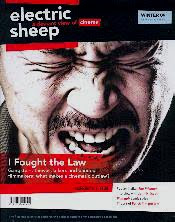
The Winter 2009 edition of Electric Sheep features my text The Law of the Gun, an essay on the Vigilante film in US cinema, featuring Death Wish, Dirty Harry and Escape from New York.

Tuesday, 8 September 2009

Recently Published


Two of my essays have been published at the start of this month: the first is a critical analysis of the BBC Three serial Being Human, published in MediaMagazine (Issue 29) and the second is a comparative analysis of Requiem and The Exorcism of Emily Rose, published in Electric Sheep (Autumn 2009).

Electric Sheep can be purchased from the newsstands whilst MediaMagazine is available from their website: http://www.mediamagazine.org.uk/

Thursday, 20 August 2009


The Summer 2009 edition of Electric Sheep features my text I Robot. I Revolt, an essay on the popular sub-genre of homicidal technological revolt in Hollywood cinema, featuring Westworld, Blade Runner, The Stepford Wives and RoboCop.

Tuesday, 16 June 2009

Recently Published


The Spring 2009 edition of Electric Sheep features my DVD review of The Carnival of Souls.