Showing posts with label MediaMagazine. Show all posts

Thursday, 6 September 2012

Recently Published


My article, Bullet by Bullet, a shot by shot analysis of the opening sequence to Sergio Leone's Once Upon a Time in the West, has just been published in the September 2012 edition of MediaMagazine. Here is a brief extract:
The opening of the film has a stark simplicity to it: three gunfighters arrive at a railway station that appears to be under construction. There they await the arrival of a train, a train which should be carrying the man whom they have been hired to kill. For most directors this sequence would be about the gunslinger’s purpose – to murder their target – but for Leone, a director obsessed by vast and grand images, unusual soundscapes and a sly sense of both humour and genre, transforms this basic premise into an eloquent and protracted sequence concerned with only one thing: waiting. Having entered the railway station and locked the station master in the cupboard, the gunslingers position themselves along the length of the platform. The apparent leader, Snaky (Jack Elam), big, imposing and with a lazy eye, sits on the bench and is annoyed by a fly. He catches it in the barrel of his pistol and, with it held against his forehead, listens to its angry buzzing as he sleeps. The second, a tall and muscular black man, Stony (Woody Strode), stands beneath a dripping girder. The water collects in his wide brimmed hat. When it is full, he slowly takes it off and drinks the water. The third gunslinger, Knuckles (Al Mulock), sits on a water trough and repeatedly cracks his knuckles. 
To order a copy of the September 2012 edition of MediaMagazine, please follow this link.

Monday, 2 April 2012

Recently Published


My Case Study on the hugely popular Electronic Arts game franchise Dead Space has just been published in the April 2012 edition of MediaMagazine. The article examines the game's production, marketing and reception as well as critiquing the various trans-media texts that surround the core narrative of the game. Here is a brief extract:

As a brand, EA has released a growing number of Dead Space games across the increasing number of gaming platforms: Dead Space was initially released on the three major gaming platforms – the PlayStation 3, Xbox 360 and Microsoft Windows. While it was expected that the next game in the series, Dead Space: Extraction, would be released onto all three platforms it wasn’t. Instead, it was released just onto the Wii. Whereas Dead Space was a Survival Horror/Third-Person Shooter, Extraction would be a Survival Horror/Rail Shooter game in order to take advantage of the controller system the Wii operates upon. Releasing Extraction just on the Wii was an interesting decision for EA to make for two reasons, primarily because the platform is not known for its mature content titles and, secondly, as a supposition, the experimental idea that the Wii’s controller system might make for a more immersive means for a Survival Horror/Shooter game.

To order a copy of this edition of MediaMagazine follow this link.

Sunday, 11 December 2011

Recently Published


My article Girl Power: The Politics of the Slasher Movie has just been published in the December 2011 edition of MediaMagazine. Here is a brief extract:

As can be seen from this selection of endings, The Final Girl uses her weapon to cut off body parts and/or impale the male killer. Given the nature of the sexualised murders throughout the film and the weapons used by The Final Girl, it can be suggest that the climatic death of the killer is a symbolic castration – The Final Girl not only kills the killer but ‘removes’ their masculinity before doing so by either disarming them or cutting off their limbs or heads. Because of this, it can be argued that the repressed virginal Final Girl is freed at the narrative’s conclusion because she has given vent to her (sexual) repressions and emerges from the narrative having killed the symbol of male dominance and sexual threat. Consequently, she becomes her adult herself – capable, in charge and powerful, both feminine and masculine, entering into the adult world on her terms, making her choices and succumbing to no one.


To order a copy of this edition of MediaMagazine, click here.

Wednesday, 7 September 2011

Recently Published


The latest edition of MediaMagazine (September 2011) features my extended essay analysing the Omaha Beach Landing sequence at the start of Steven Spielberg's Saving Private Ryan. Accompanied by a one-page frame-by-frame illustration, the text examines the rationale behind the sequences Vérité style and the shift in the meaningful value of the shots used by Spielberg. Here is a brief extract:

For Miller, the slow motion functions as a representation of how he is witnessing the events for it visualises the horror of his experience - he is surrounded by a chaos of noise and movement, seeing not only death but the dreadful massacre of his men, all of which is too much for him to comprehend or bear witness to. The effect of the slow motion amplifies the horror by fragmenting its depiction into briefly frozen moments; but it also implies that Miller himself is trying to edit out the intensity of the violence by 'missing out' certain frames of action.

To order a copy of this edition of MediaMagazine, click here.

Tuesday, 12 April 2011

Recently Published


My essay Quid Pro Quo: Visiting Doctor Lecter has just been published in the April 2011 edition of MediaMagazine. The text examines the collaborative partnership that occurs between trainee FBI Agent Clarice Starling and imprisoned cannibal Dr Hannibal Lecter and how this relationship may lead to a mutual attraction ...

...the quid pro quo develops to such an extent it becomes apparent that Lecter and Starling may be, in some way, attracted to each other. This is not necessarily sexual but more through a shared interest in the other's psychology: Lecter's interest in Clarice can be read as one in which he attempts to heal her psychological problems while Clarice's interests in him allows him the opportunity to express his intellect and demonstrate his great skill in profiling. Consequently, their collaboration simultaneously functions not only to construct a profile of Buffalo Bill but also to allow each other to explore the other's psychology.


To order a copy of the April 2011 edition of MediaMagazine, click here.

Thursday, 10 March 2011

Recently Published

My essay, A Very British Doctor, has been published in the February issue of MediaMagazine as part of their Culture special. The essay examines representations of Britishness in the Russell T. Davies era of Doctor Who, taking in a (albeit brief) history of Torchwood along the way. I wrote quite an extensive examination, some of which had to be edited out. Here's a snippet of what fell to the cutting room floor...

…Torchwood’s Yvonne Hartman, by the end of Doomsday, transgresses her xenophobic attitude: although been upgraded into a Cyberman herself, she holds on to her human identity and, in a final act of defiance against the Cybermen, overcomes her programming and fights against them. With gun in hand she kills numerous Cybermen, all the while chanting a mantra of “I fought for Queen and Country”. Her final act is one of defending the borders but not of Torchwood’s Victorian ideals but of contemporary Britain – Hartman’s destruction of the Cybermen indicates it is better to be individual and diverse than to be one and the same.

Such an attitude is extended into the character of Captain Jack Harkness, the leader of Torchwood Three, who acts as the bridge between both Doctor Who and Torchwood. As an Ominsexual, Harkness shares and later embodies the Doctor’s attitude to diversity and difference. Harkness seeks to rework Torchwood for within, changing its agenda and forcing it to protect and serve the populace instead of empire building.

Thursday, 1 April 2010

Recently Published


My article on E4's Misfits has just been published in the April 2010 edition of MediaMagazine. The text explores what it means to be both an outcast and superhero and how these qualities relate to the humorous nature of the series.

To order a copy of this edition of the magazine or to subscribe to MediaMagazine, click here.

Sunday, 28 February 2010

Recently Published


My article, Reading the Apocalypse, has just been published in this quarters edition of Media Magazine: the text examines the history of the apocalypse narratives in British film and television, including The War Game, Threads and the recently revived series of Survivors. Here is a brief extract...


Throughout the steadily evolving history of the Post-apocalypse genre, those narratives based within Britain, be that film or on broadcast television, have a dominating preoccupation with two concerns: the contextual/political background to the story more often than not reflects the nation’s contemporary anxieties whilst its drama focuses on the plight of one or two families. When combined, this family becomes a metaphor for all families and so, in effect, come to represent the national experience in the face of real-world concerns. Perhaps predictably, these issues have a tendency to shift only slightly, fluctuating between the horrific consequences of a full-scale nuclear assault on mainland Britain to viral pandemics devastating the populace. In both scenarios, the causalities will be extremely high, its impact irreversibly changing the nation. And whilst these narratives are horrific, they function as a means of chronicling the social and political modes and shifts with the country. In this respect, these films and programmes of fiction becomes very clear works of fact for they respond clearly and without hesitation to the fears of the nation. With such destructive threats, the family – or at least what remains of it after the initial assault or outbreak – also shifts, from a normal functioning family unit to one that is at the mercy of a collapsing society: failing law and order, civil unrest, lack of food, fresh water and sanitary systems alongside looting, martial law, vigilante law and rape. Out of all these elements emerges a further recurrent element within the British post-apocalyptic narrative: in terms of its representation, these films and television serials have a clear preoccupation with realism. Instead of showing the consequences of assault or pandemic in abstract terms, they are shown in clear, brutal and graphic images, each time the camera lingering on the dire impact of a national catastrophe. Within these visual texts then the horror not only parallels but as warns us of our possible futures.
To order a copy of this edition of the magazine or to subscribe to MediaMagazine, click here.

Tuesday, 15 December 2009

Recently Published


My article on the Horror Mockumentary has just been published in the December edition (Issue 30) of MediaMagazine: initially charting the rise of the sub genre, the text then goes on to provide in-depth textual analysis of films such as Cannibal Holocaust, The Blair Witch Project, Dairy of the Dead and Clovefield. The text concludes with an exploration of how the 'real' in these films is marketed to potential audiences.

To order a copy of this edition of the magazine or to subscribe to MediaMagazine, click here.

Wednesday, 18 November 2009

Notebook Extract

Whilst writing the Reading the Apocalypse article for MediaMagazine, I looked through my notebooks and found a text regarding Jimmy T. Murakami's When the Wind Blows. Here is the notebook entry, in full:

In addition to The War Game and Threads, a further Cold War/ Post-apocalyptic narrative would emerge from Britain: based on the graphic novel by Raymond Briggs, When the Wind Blows is an animated film that recounts the effect of a nuclear strike on the UK from the perspective of an elderly couple, Jim and Hilda Bloggs. Like its predecessors, the film depicts narrative events from an extremely realistic point of view - Jim and Hilda’s radiation sickness brings about both calming hallucination and terrible sickness, their lack of food and water steadily starving them until, eventually, both die in their sleep. The film’s sense of tragedy is compounded not just by the simple metaphor that Jim and Hilda represent but because of their very lack of knowledge of how to cope in the situation they are forced into. Throughout the film Jim and Hilda recount there experiences of the Second World War, describing it as a violent period but one in which the threat was known and one in which society pulled together as a unified whole to overcome this shared enemy. The war, for them, was in another country, far, far away. From these experiences emerges their unwavering faith in the government. As Jim and Hilda drink cups of tea, Jim assures his wife that everything will be alright and that he is sure the government is working effectively to bring everything back to normal. For all his faith, Jim fails to realise that there probably is not a government and that although they have survived the nuclear blast, they are now subjecting themselves to fallout and radiation poisoning. Whilst the film shifts towards its extremely bleak ending, there are moments of stark humour that contrast sharply with the stark reality the film depicts, culminating in a film that is as poignant as it is terrifying.

Tuesday, 10 November 2009

Recent Commissions

I recently completed a commissioned article for the February Fantasy themed edition of MediaMagazine: Reading the Apocalypse is an overview of British post-apocalyptic film and television, covering The War Game, Threads, and both versions of Survivors. In the original draft there was a section concerning 28 Days Later but this was, eventually, cut due to the required word count.

Never one to waste words, it is included here...

28 Days Later (Danny Boyle, 2002)

While a nuclear assault destroys the physical landscape, a viral pandemic only destroys the populace, leaving in its deadly wake a litter of corpses but buildings, shops, and homes all still standing and untouched. Such a quality allows filmmakers to create desolate images of familiar locations, poignantly creating the horror of the consequences of a viral outbreak. The potential for these images to be so dramatic is validated by 28 Days Later: having woken from a comma, young bicycle courier Jimmy (Cillian Murphy) finds the British population virtually eradicated by the accidental release of the Rage Virus: stumbling outside, he finds a very familiar London totally devoid of people. There no corpses, just the empty streets, an overturned bus, and bank notes blowing in the wind. As he wanders through he streets, Jimmy passes familiar landmarks – Tower Bridge, the London Eye and Cenotaph – that are all rendered as if grave markers to the deceased population.

As Jimmy’s story of survival unfolds, the theme of family very quickly comes to the fore: being chased by a group of the Infected, Jimmy is saved by Selena and Mark. Taking him to their underground hideout, Jimmy is informed of the current national (if not global) situation. The three seem to form a family unit, but it is one cut very short when Selena thinks Mark might be infected and quickly – and rather brutally – kills him. From this act it would seem that the notion of the family has been totally voided by the pandemic but as the narrative unfolds, it becomes clear that the film is not just about surviving in a post-apocalyptic world but starting a new and better family in this new world. As a consequence, Jim’s personal narrative trajectory becomes the search for a father figure, which leads him into encounters with two ‘families’ – the normal domestic of past offered by Frank (Brendan Gleeson) and his daughter Hannah (Megan Burns) and that of the future represented by a military outpost. Soon, Jim has to make his choice between the two and, in a violently cathartic conclusion, takes on the role of the Father himself to eradicate the threat presented to him and those he cares for. For a violent and pessimistic film, 28 Days Later ends on a perversely optimistic end: the three survivors – Jim, Selena and Hannah – are seemingly rescued as the Infected slowly die of starvation.

The film’s writer, novelist Alex Garland, has stated that the influences upon 28 Days Later ranged from the classic texts by Wells and Wyndham as well as more recent American cinema, particularly the zombie films of George A. Romero. Using the realist elements of these texts to guide him, Garland created the fictional Rage Virus – a seemingly genetically engineered disease - as a blood borne disease. With such a construct, the Rage Virus becomes an obvious metaphor for the nation’s fears of Ebola, SARS, Avian Flu as well as the sustained awareness of AIDS.

Sunday, 1 November 2009

Current Commissions

October has been a very busy month, hence the complete lack of posts . I have been working hard on multiple projects, all now complete and with their respective editors awaiting publication:

I finished the final amendments on The Devil's Backbone Study Guide and signed off the final proofs. The book is now set for publication and should be with the printers this week.

The article on Horror Mockumentaries is now finished and ready for publication in the next edition of Media Magazine.

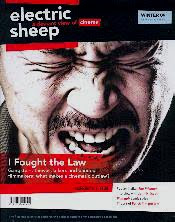
The text on Vigilante Cinema has now been completed. A few minor changes were made and is now ready for publication in the Winter edition of Electric Sheep.

The essay on Tim Burton's early shorts - Vincent and Frankenweenie - is due for publication in the next edition of Splice.

The interview with Colin director Marc Price has been conducted, transcribed and formatted ready for publication in a forthcoming edition of Offscreen.

And finally, the interview with Hardware and Dust Devil director Richard Stanley is due for publication in this month's edition of The Irish Journal of Gothic and Horror Studies.

Tuesday, 8 September 2009

Recently Published


Two of my essays have been published at the start of this month: the first is a critical analysis of the BBC Three serial Being Human, published in MediaMagazine (Issue 29) and the second is a comparative analysis of Requiem and The Exorcism of Emily Rose, published in Electric Sheep (Autumn 2009).

Electric Sheep can be purchased from the newsstands whilst MediaMagazine is available from their website: http://www.mediamagazine.org.uk/